Pillar Guide · Storm Damage Roof Repair
Storm Damage Roof Repair in Beaumont
Storm damage ranges from a lifted ridge cap to a roof opened by a falling tree, and the right repair depends on telling them apart. This guide covers how storm damage is assessed and repaired in Beaumont after Gulf weather moves through.
The Problem
What does storm damage actually do to a Beaumont roof?
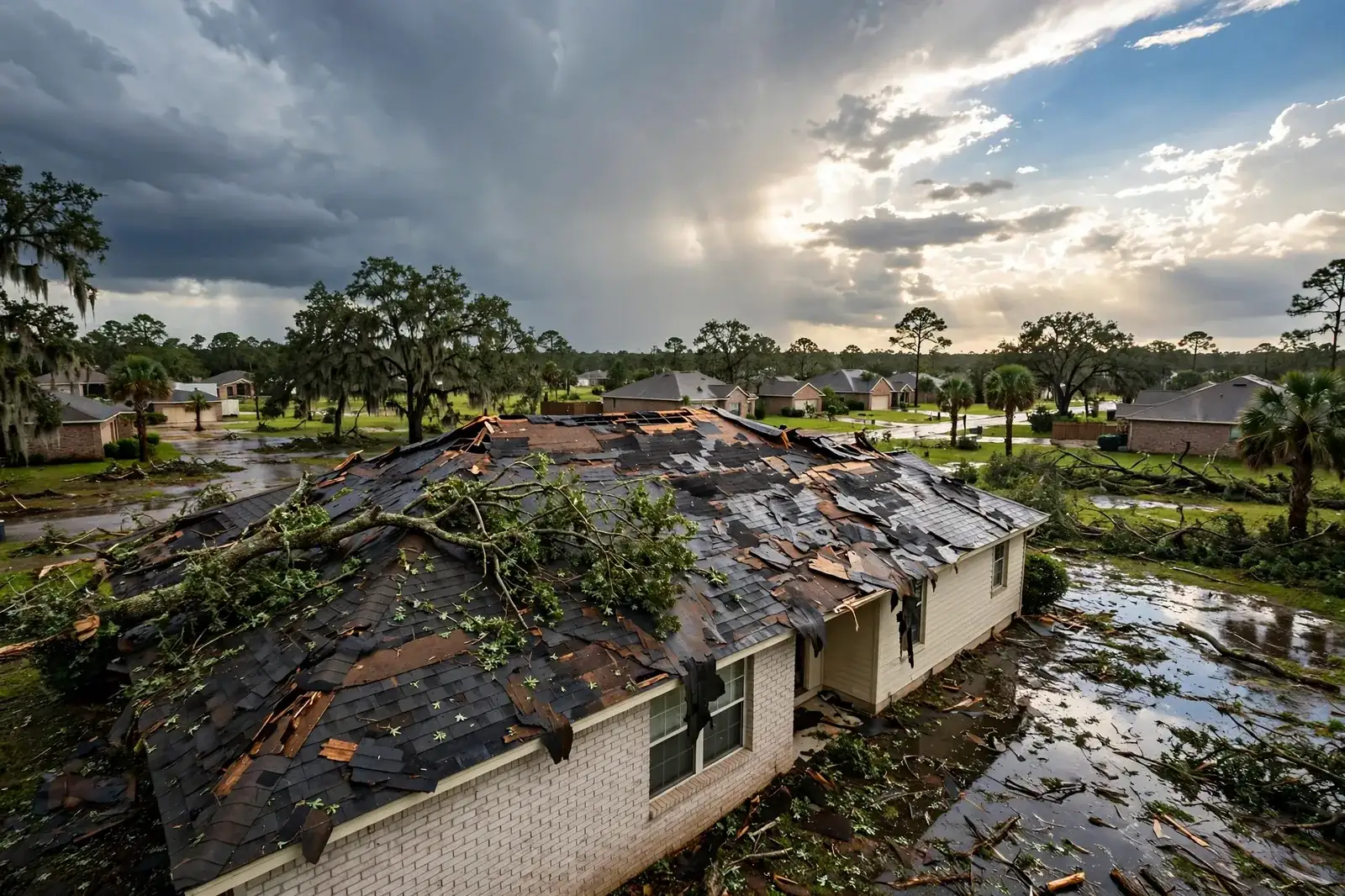
Storm damage is not one thing, and treating it as one thing leads to poor repairs. Wind peels and creases shingles, drives rain under laps, and works flashing loose. Flying and falling debris punctures surfaces and crushes sections. The rain that follows a Gulf storm then exploits every opening for hours. A Beaumont roof can carry all three kinds of harm at once, in different areas, and a proper assessment separates them because each is repaired differently and some are far more urgent than others.
Much storm harm is invisible from the ground, which is the central problem for homeowners. A creased shingle that was folded back by wind and settled again looks untouched from the street, but its seal and mat are broken, and it will lift and leak in the next event. Granule loss after a severe storm shortens the life of the whole surface without any single dramatic hole. Homeowners who judge storm damage by what they can see from the driveway routinely underestimate what a roof level inspection finds.
Timing shapes the outcome. Openings left through Beaumont rain bands soak decking and insulation quickly, turning surface damage into structural repair. At the same time, rushing into a full repair before the damage is documented and assessed can bury problems that should have been recorded. The sensible sequence after a storm is protect first, document carefully, then repair permanently on a complete picture of what the weather actually did to the roof.
Causes
What kinds of storm damage do Beaumont roofs suffer?
Storms damage roofs through wind, water, and impact, and Beaumont gets all three in a single event. These are the failure types contractors look for after severe weather.
Wind uplift and creasing
Gusts lift shingle tabs beyond their flex point, cracking the mat along a line even when the tab settles back into place. The seal bond breaks, so the tab will lift again in lesser wind. Creased shingles cannot be reliably resealed, and the honest repair is replacement of the affected units, slope by slope where the damage runs.
Missing shingles and exposed underlayment
Where wind wins completely, shingles and sometimes underlayment are removed, leaving decking exposed to the rain that follows. Exposed areas need covering the same day where possible. Even a small bare patch admits a large volume of water in a Beaumont downpour, and the edges around it have usually been lifted and weakened too.
Tree and debris impact
Limbs, fallen trees, and wind carried debris puncture and crush roof sections, sometimes damaging rafters and decking below the surface. Impact zones channel water well beyond the visible hole through crushed, misaligned material. These areas need structural checking before roofing work, and covering them safely is the first priority after any storm.
Flashing and ridge displacement
Ridge caps take the full force of wind crossing the peak, and flashing at chimneys and walls is bent and unsealed by the same gusts. Damage here opens the joints that shed the most water. A roof can keep most of its shingles and still leak badly after a storm purely through displaced ridge and flashing work.
Granule stripping
Wind driven rain and debris scour granules from the shingle surface, visible afterwards as heavy grit in gutters and at downspout outlets. Granules are the surface protection against sun and water, so a stripped roof ages rapidly even with no leak yet. This damage affects lifespan rather than immediate weather tightness, and it belongs in any honest post storm assessment.
Gutter and drainage destruction
Storms tear gutters from fascia, fill valleys with debris, and block drainage paths across the roof. The roofing surface may be sound while backed up water pours over edges and under laps. Drainage damage causes leaks that mimic surface failure, and it must be corrected as part of the storm repair or the leaks will continue.
The Process
How is storm damage repaired after a Beaumont storm?
Protect open areas first
Any exposed decking, puncture, or active leak is covered or made weather tight before detailed assessment begins. In Beaumont this stage races the next rain band, and it takes priority over documentation and finish decisions. A protected roof can wait for a thorough inspection, an open one cannot.
Document the whole roof
The contractor walks every slope, photographing missing and creased shingles, displaced flashing, impact points, and gutter damage, and checks the attic for entry. This record supports your decisions and any claim you choose to make. Skipping slopes that look fine from the ground is how creased and lifted damage gets missed.
Agree the repair scope by area
Damage is grouped into what needs rebuilding, what needs component replacement, and what is sound. You receive a scope that names each area and its work, so a stripped section, a creased slope, and a torn gutter are not blurred into one vague figure. Structural harm, where found, is flagged for the right trade sequence.
Rebuild and verify drainage
Sections are rebuilt in order, structure, decking, underlayment, surface, flashing, and ridge, with gutters and valleys cleared and refitted last. The finished roof is checked for water flow, not just appearance. Storm repairs fail most often when drainage is left as found, so this final check is part of the job, not an extra.
In Detail
Why does hidden storm damage matter months later?
Creased and lifted shingles are a delayed problem. The roof may shed ordinary rain for months after the storm, because the broken seals only fail when wind lifts the tabs again or drives rain under them. Homeowners then face a leak in a later, smaller storm and do not connect it to the earlier event. Having the roof walked and the creasing recorded soon after severe weather is what preserves both the evidence and the option to repair a defined area instead of chasing a mystery leak later.
Granule loss works on a longer clock still. A scoured surface loses its protection against Gulf sun, becomes brittle sooner, and starts cracking across whole slopes rather than at single points. Nothing leaks this season, so the harm is easy to dismiss, yet the roof has effectively aged years in one night. A post storm assessment that reports granule condition honestly lets you plan, budgeting for surface work on a realistic horizon instead of being surprised by widespread failure a few summers later.
Local Conditions
How does Beaumont weather drive storm damage roof repair?
For storm damage roof repair, Beaumont's climate is not background detail, it is the cause behind most calls. Hurricanes and tropical storms are a recurring fact of life on this part of the Gulf Coast. Tropical Storm Imelda in 2019 also caused historic flooding in the city.
Much of the city's roof stock is therefore 40 to 100 years old in structure, even where the roof covering itself has been replaced several times. For roofs, the Beaumont combination that matters is high annual rainfall, sustained humidity, algae friendly shade, and periodic hurricane wind and wind driven rain. A contractor who works in Beaumont reads that weather history in the roof itself, which is why local experience matters for storm damage roof repair.
Summers are long, hot and humid, and the wet season runs roughly from April to October. Hurricane Rita in 2005 and Hurricane Ike in 2008 both caused significant damage in the area. None of that makes storm damage roof repair unusual work in Beaumont. It makes it routine work, done by contractors who see the same Gulf weather patterns on roofs across the city every week.
Cost Factors
What does storm damage roof repair cost in Beaumont?
Storm repair costs follow the type of damage more than the size of the storm. These rows cover the work that makes up most post storm bills in Beaumont.
Ranges are general guidance, not a quote. The contractor confirms the final price after inspecting your roof.
When To Call
When should you call after a storm damages your roof?
Call the same day if you have missing shingles, visible damage, a leak, or debris on the roof, and call before the next rain band if you possibly can. In Beaumont the weather that damaged the roof usually has more rain behind it, and a prompt cover is the difference between surface repair and soaked decking. Take safe photos from the ground for your records while you wait.
Also call after any severe storm even without visible damage, if the event brought extreme wind or falling trees to your area. A roof level check finds creasing, lifting, and flashing harm that ground level viewing cannot. Post storm inspections in this city are routine maintenance after serious weather, not an overreaction, and they are far cheaper than the delayed leaks hidden damage produces.
Go Deeper
Where does storm damage roof repair go from here?
City Page
Storm Damage Roof Repair in Beaumont, TX
The local service page for storm damage roof repair across Beaumont, with first steps, response and coverage.
Open the city page →Neighbourhood
Storm Damage Roof Repair in Amelia
How storm damage roof repair plays out in Amelia, with the problems local homes see most.
Storm Damage Roof Repair in Amelia →Cost Guide
Storm Damage Roof Repair Cost
Typical Beaumont price ranges for this kind of repair and what moves the price.
Read the cost guide →Storm Damage Roof Repair by neighbourhood
The Storm Damage Roof Repair in Beaumont, TX city page covers the whole city. Each neighbourhood page below looks at storm damage roof repair on its own streets, with its own housing and exposure.
FAQ
Storm Damage Roof Repair questions, answered
Protecting the roof from further water entry should not wait, temporary covering is expected of homeowners and prevents a small claim from becoming a large one. Keep receipts and photos of the damage and the cover fitted.
Permanent repairs are best agreed once the damage is fully documented. Your contractor can provide the photographic record and scope description that support any claim process you choose to follow.
Yes. Creased shingles, broken seals, granule stripping, and displaced flashing often cause no immediate leak. They shorten the life of the roof and set up leaks in later weather, which is why they are worth finding now.
A post storm inspection distinguishes cosmetic marks from functional damage. Not every scuff needs repair, and an honest contractor will tell you which findings matter and which can simply be noted.
Sealing a creased tab treats the appearance, not the break in the mat or the lost bond. Under the next strong wind the same tab lifts again, and the crack line lets water through. Replacement of creased units is the durable repair.
Where creasing is scattered, individual units can be replaced. Where a whole windward slope is creased, your contractor should discuss section level work so you are not paying for piecemeal repairs repeatedly.
A local roofing contractor does the inspection and the repair work, and sets the price. Beaumont Roof Repair TX connects you with that contractor and is clear that it does not carry out roofing work itself.
You deal with the contractor directly on scope, timing, and payment. Keeping that relationship direct is what keeps responsibility for the finished repair clear.
Talk to someone about your roof today
Describe the problem on one call and get connected with a local Beaumont roofing contractor.