Homeowner Guide
Roof Repair vs Replacement in Beaumont: Which Makes Sense for Your Home?
Choosing between repairing a roof and replacing it is the biggest call a Beaumont homeowner makes about the roof, and it should rest on evidence rather than age, habit, or pressure. This guide works through the question in plain terms: when a repair genuinely settles a problem, when the pattern of faults points the other way, how age and cost change the balance, and what an inspection must show you before you decide either way.
Guide
When does a repair make sense?
A repair makes sense when the damage sits in one place and the rest of the roof is still doing its job. A single failed detail, such as cracked flashing at a chimney joint, a split pipe boot, or a small patch of shingles lifted by a Gulf storm, can usually be put right on its own. The surface around the fault still sheds water, the decking underneath feels firm, and the fix restores a sealed roof without disturbing sound material. In that situation, work such as flashing repair at $275 to $800 or pipe boot replacement at $150 to $400 is a proportionate answer, with the firm figure confirmed after inspection.
The pattern of the problem matters more than the size of the first stain. One leak with a traceable entry point points toward repair, while faults scattered across several slopes point the other way. Ask where the water gets in, how far it has travelled, and whether the material around the entry point can still hold a new seal. On many older Beaumont homes a single weak detail sits within an otherwise honest roof, and dealing with that detail fully ends the problem. A contractor should be able to show you photographs of the fault and of the sound surface around it, so the case for repair rests on what the roof actually shows.
Guide
When does replacement make more sense?
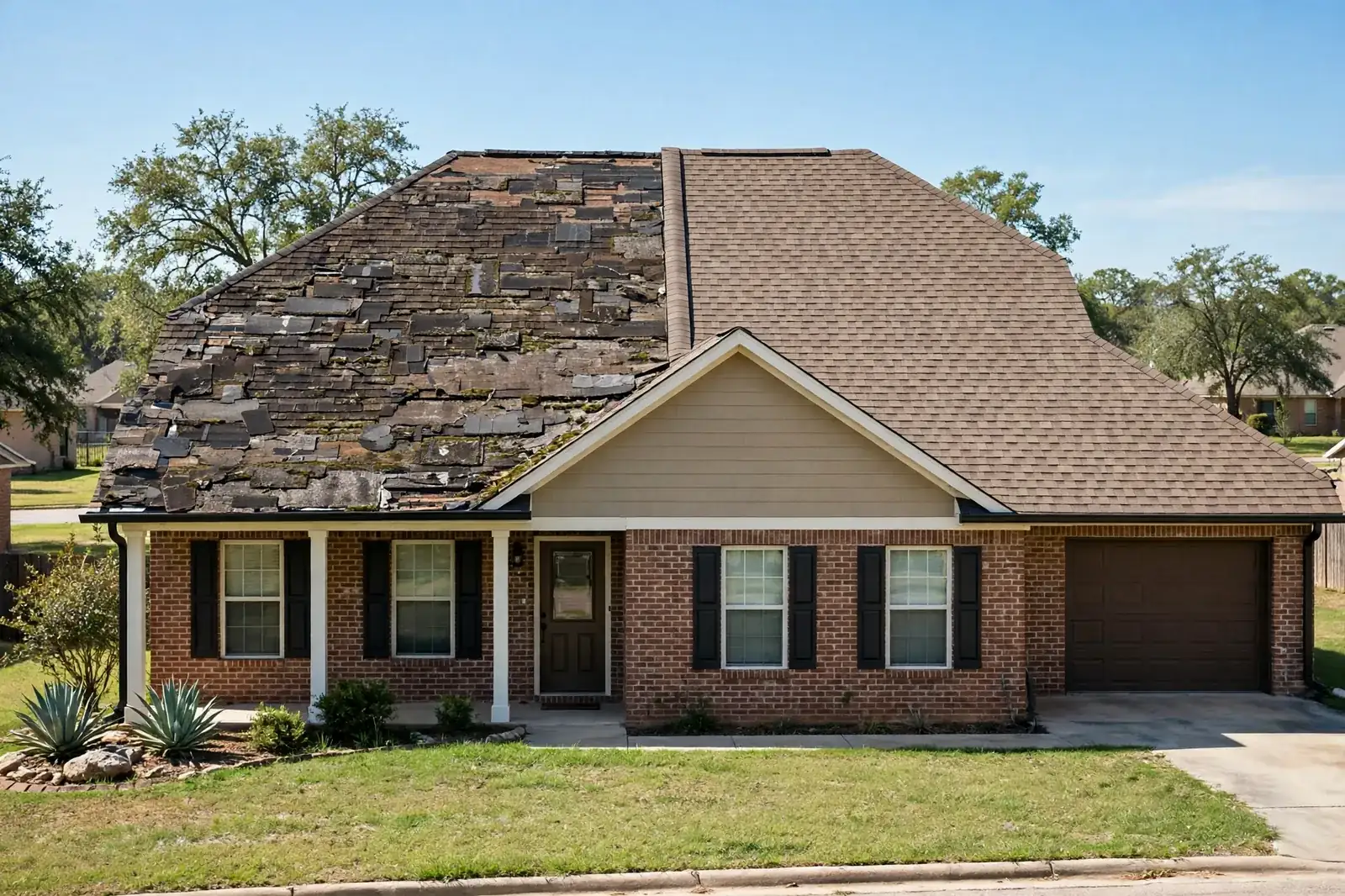
Replacement moves to the front of the conversation when problems stop being isolated. Leaks appearing in more than one room, shingles losing their surface across whole slopes, edges lifting in several places, and patches sitting on top of older patches all describe a roof wearing out as a whole. At that point each new repair deals with one symptom while the next weakness is already forming nearby. Continuing to patch can still keep water out for a while, but the intervals between problems tend to shorten, and the homeowner ends up managing a failing surface rather than relying on a sound one.
What sits below the surface can settle the question on its own. Decking that feels soft across a wide area, or a visible dip along a slope, means the base that any repair must fix to is no longer firm. Sagging roof assessment and repair runs from $600 to $1,800 as general guidance, and that kind of work makes most sense when the weakness is local. When soft decking or sagging shows up in several places at once, surface repairs are being asked to hold on a structure that is giving way beneath them, which is a poor foundation for more spending.
Repair history tells its own story, too. If the last few storm seasons have each brought a fresh bill, and the faults keep appearing in new places rather than returning to one old one, the roof is spending money without settling. Add those bills together and compare them honestly with the cost of a new roof that ends the cycle. A straight talking contractor will lay that comparison out without pushing either way, explain where the threshold sits for your roof, and leave the decision with you.
Guide
How does roof age change the decision?
Age changes what a repair can realistically achieve, because the material around the damage decides how well any fix can blend in and hold. On a younger roof the shingles are still flexible, the seals are still bonding, and a replaced section settles back into a surface that behaves as one piece. The same repair on a roof deep into its life meets brittle material that cracks when it is lifted to fit new flashing, and thin, faded surfaces that shed water less reliably. The fault gets fixed, but the roof around it offers the new work less support.
Beaumont conditions press harder on an older roof. Years of strong sun bake the flexibility out of shingle surfaces, high humidity keeps any damp patch slow to dry, and heavy rain finds the small gaps that age opens at laps and joints. Many homes in the city carry roofs that have already been patched more than once, sometimes with materials that only roughly match what was there. Each of those earlier jobs changes how the next one should be judged, which is why two roofs of the same age on the same street can honestly receive different advice from the same inspection.
Guide
How should you compare the cost of each path?
Compare the whole cost of staying with repair, not just the next bill. One leak repair at $300 to $900 dealt with properly can be the end of the matter, but the same figure repeated across three or four visits in a couple of years is a different proposition. Add in the quieter costs of a roof that keeps letting water in, such as stained ceilings, damp insulation, and repainting, and the repair path can cost more than it first appears. Writing those figures down side by side turns a gut feeling into a comparison you can actually test.
Make sure the two prices you compare cover comparable things. A repair quote covers a named area and a named detail, while a replacement quote covers stripping the old surface, checking the decking, fitting a complete new surface, and clearing away the old material. Neither figure means much without its scope in writing, so ask each contractor to set out what is included, what is not, and what would change the price if hidden damage appears. Every price mentioned in this guide is general guidance for planning, and the contractor confirms the firm figure for your home only after inspecting the roof in person. Put the two written scopes side by side on the table before you compare a single figure.
Guide
What should an inspection tell you before you decide?
An inspection should first establish where water is getting in and how many entry points there are. That sounds obvious, but the stain on a ceiling often sits well away from the fault on the roof, because water travels along decking and timbers before it drops. The contractor should trace each stain back to its source, check the flashing, vents, and valleys around it, and say clearly whether the roof shows one isolated failure or a wider pattern. Photographs of each entry point found make that explanation easy to follow and hard to argue with later. A stain that cannot be traced to a source deserves more looking, not a quicker guess.
It should also describe the condition of what cannot be seen from the street. Decking that is firm in one area and soft in another, underlayment that has stayed damp, and earlier patches that are lifting all change the balance between repairing and replacing. A good inspection separates the urgent items from the ones that can simply be watched, and says what is likely to happen if each is left alone. Where the surface hides something that only opening the roof will reveal, that uncertainty should be named openly rather than smoothed over, so you know exactly which parts of the advice are certain and which are judgement.
Guide
What happens if you delay the decision?
Delay rarely leaves a roof problem exactly as it was. A lifted edge that survived one storm sits looser for the next, and wind driven rain works further under the surface each time it blows. Water that enters in small amounts keeps decking damp between rains in Beaumont humidity, and timber that stays damp weakens gradually, turning a surface repair into surface plus decking work. The stain downstairs tends to grow in step, so the eventual job often includes putting right interior damage that an earlier decision would have avoided altogether.
Waiting also changes the practical picture around the work. After a Gulf storm passes through Southeast Texas, local contractors book up quickly with urgent calls, and a homeowner who already knew their roof was failing joins the same queue as everyone else. Material choices may narrow when a job becomes urgent, and the calm comparison of repair against replacement gets replaced by whichever fix can happen first. None of that means every decision must be rushed, but a known weakness is cheapest to deal with while it is still a choice rather than an emergency.
Keep Reading
What should you read next?
Related
Storm Damage Roof Repair
Continue with the related page on this site.
Storm Damage Roof Repair →Related
Signs Your Roof Needs Repair
Continue with the related page on this site.
Signs Your Roof Needs Repair →FAQ
Questions, answered
In most cases it settles the question, because the decision turns on evidence an inspection gathers directly: how many entry points exist, how the decking feels, how widespread the surface wear is, and what earlier repairs have already been tried. Where part of the answer hides below the surface, a careful contractor says so and explains what opening the area would confirm, rather than pretending to certainty the roof has not yet offered.
Usually, yes, provided the rest of the roof checks out as sound. A single room stain normally traces back to one entry point, such as a failed flashing joint or a cracked pipe boot above that part of the house. If the inspection finds the surrounding surface firm and the wear contained, a repair aimed at that one source is the proportionate answer.
There is no fixed number that suits every roof, so watch the pattern instead. Repairs arriving closer together, faults appearing in new places each time, and each fix buying less settled time than the last are the signals that patching has stopped paying. Ask the contractor to total your recent repair bills with you and set that figure beside a replacement price, because the comparison often makes the right moment obvious.
Settling the question before hurricane season is sensible when the inspection already shows widespread wear, because a tired roof meets Gulf storms with lifted edges and tired seals that strong wind and driven rain exploit. The calendar alone is not a reason to replace a sound roof, though, so let the findings lead and the season set the timing.
Keep the photographs of each fault found, the traced entry point for any leak, a note of decking condition, and the proposed scope and price for each path the contractor recommends. Ask for the circumstances that would change a price, such as hidden damage under the surface, to be written down as well. That record lets you compare a second opinion fairly and shows a future buyer exactly what was found and done.
Talk to someone about your roof today
Describe the problem on one call and get connected with a local Beaumont roofing contractor.