Pillar Guide · Roof Tarping
Roof Tarping in Beaumont
A roof tarp is a race against the next rain band, a temporary cover that decides how much of your home stays dry while the real repair is arranged. This guide explains how tarping works in Beaumont, how long a tarp can be trusted, and what must follow it.
The Problem
When does a Beaumont roof need a tarp?
A tarp is needed when the roof cannot keep the next rain out and a finished repair cannot happen first, a hole from a fallen limb, a section stripped by wind, a fire or impact opening, or storm damage discovered with more weather already approaching. In Beaumont that gap between damage and repair is dangerous in a way it is not in drier places, because the rain that follows Gulf storms arrives in repeated bands over hours and days, and an uncovered opening will take water for the whole of it. The tarp converts an emergency that grows by the hour into a protected wait.
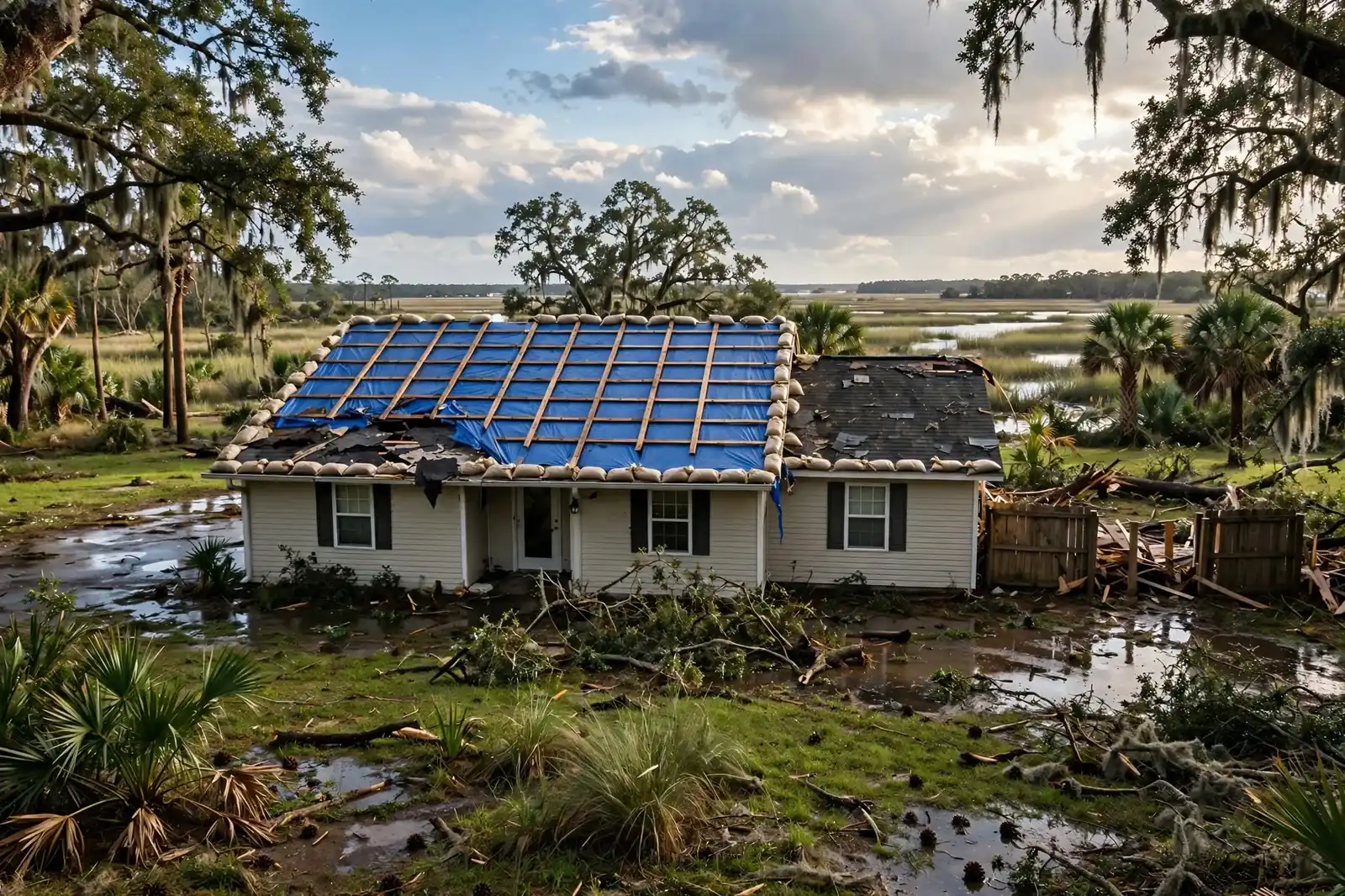
A good tarp is a fitted, secured cover, not a sheet thrown over a hole. It is sized to run from above the damage, over a ridge where possible so water cannot get under its top edge, anchored with battens and fixings that hold in wind without shredding the surrounding roof, and arranged so the water it collects is discharged off the roof, not ponded against a wall or into a valley. The difference between that and a loose cover flapping at its corners is the difference between a dry home through three rain bands and a wet one by the second.
Tarping also has a clock and a duty attached. A tarp is a temporary measure with a working life of weeks in Beaumont sun and wind, and it is the start of a process, damage assessment and permanent repair, not a substitute for it. Homeowners who treat the day the tarp goes on as the day the problem was solved meet the problem again, enlarged, when the tarp ages out mid season. The contractors who fit tarps here will tell you its expected life and book the follow up conversation before they leave the roof.
Causes
What damage leads to roof tarping in Beaumont?
Tarping follows sudden, open damage that cannot wait for a finished repair. These are the situations that most often need a cover in this area.
Tree impact holes
A limb or trunk section through the roof leaves an irregular opening with crushed material around it that cannot be made weather tight by simple patching in storm conditions. A tarp bridges the whole damaged zone, including the crushed margins, until the structure is checked and the section can be rebuilt. Impact tarps must also cope with debris still on the roof, which shapes how they are anchored.
Wind stripped sections
Where wind has removed shingles and underlayment across an area, the exposed decking takes rain directly and the surrounding lifted material will keep tearing if left. A secured tarp protects the whole stripped field and its vulnerable edges at once, which individual quick fixes cannot do across a large bare area in worsening weather.
Storm torn flashing and ridge loss
Severe gusts can tear ridge caps and flashing runs off a roof, opening its highest and most exposed lines just as the heaviest rain arrives. Tarping over a ridge is particularly effective because the cover can be carried over the peak, shedding water to both sides. These openings look small from the ground and admit a remarkable volume of water untarped.
Fire and other structural openings
After a fire, a partial collapse, or any event that opens the roof structure, tarping protects the interior and the surviving structure from weather while the larger situation is assessed. The cover in these cases is part of making the property safe and limiting further loss, and it may need to stay in place, maintained, longer than a storm tarp while decisions and trades are organised.
Failed previous repairs mid storm
A patch, tarp, or ageing section that lets go during a storm reopens a known weak point at the worst moment, often with the added problem that the failed material is now loose on the roof. A fresh, properly anchored tarp over the whole area resets the situation, and the permanent repair that follows replaces, rather than repeats, whatever failed.
Leaks that cannot yet be repaired in wet weather
Some permanent repairs, membrane seams, flashing mortar work, coating based systems, cannot be executed on a wet roof or in continuing rain. Where such a leak is admitting significant water, a tarp over the source area keeps the home dry through the wet spell so the real repair can be done in the dry window it requires, instead of being attempted badly on a damp surface.
The Process
How is a roof tarped properly?
Assess the opening and the safe approach
The contractor sizes the damaged area, checks for structural hazards like hanging limbs or weakened decking, and plans the cover size and anchoring before going up with materials. Tarping a structurally doubtful area is done from safe positions and ladders where needed. This brief planning is what keeps an emergency job from creating a second emergency on a wet, damaged roof.
Prepare the surface and clear debris
Loose material, branches, and sharp debris in and around the damaged area are cleared or made safe so they cannot puncture the cover or channel water under it. Crushed edges that would cut the tarp under wind movement are padded or trimmed back. Water already ponding in the damaged zone is directed off the roof as part of the preparation.
Fit the tarp over a high point
The tarp is laid to run from above the damage, over the ridge or a high lap where the layout allows, so rain meets a continuous downhill surface with no top edge to get under. It is sized generously beyond the damaged margins in every direction. On flat or low sections, falls are arranged so the cover drains rather than holding a pond of its own.
Anchor with battens and check the discharge
Edges are secured with timber battens screwed through into sound structure, not with loose weights or nails through the tarp face alone, so the cover holds in the wind that usually follows in Beaumont. The contractor then checks where the tarp discharges its water, confirming gutters or ground receive it, and tells you the cover expected life and the next step for permanent repair.
In Detail
How long can a tarp be trusted in Beaumont weather?
A well fitted tarp on a Beaumont roof is a matter of weeks of reliable service, not a season. Ultraviolet light degrades the material steadily, wind works its fixings and edges with every gust, and each rain band tests the anchoring again. Cheaper, thinner covers age faster, and any tarp that has been through a second serious storm should be inspected rather than assumed sound. Ask the contractor who fitted yours for its realistic horizon in writing, and diarise a check before that date, a five minute look that has saved many ceilings.
The other limit is what is happening underneath. A tarp stops new water, it does not dry the decking, insulation, and ceilings that got wet before it went on, and it can slow the drying of the area it covers. Where significant water entered before tarping, the permanent stage should include opening, drying, and checking the affected materials, not just roofing over the top. A home that was tarped quickly and then properly dried and rebuilt comes out of a storm in good shape, a home roofed over while still wet carries the storm indoors for months.
Local Conditions
How does Beaumont weather drive roof tarping?
For roof tarping, Beaumont's climate is not background detail, it is the cause behind most calls. Hurricane Rita in 2005 and Hurricane Ike in 2008 both caused significant damage in the area. Hurricane Laura in 2020 was forecast to strike near the Texas and Louisiana border but turned east, sparing Beaumont its worst impacts, with a recorded gust of 74 miles per hour at Beaumont Municipal Airport, and Hurricane Delta weeks later brought gusts to 90 miles per hour at Jack Brooks Regional Airport and felled trees across the area.
['architectural asphalt shingle, the most common covering on Beaumont homes', 'composition and three tab asphalt shingle, still found on older and smaller homes', 'standing seam and panel metal, increasingly used as a storm resistant replacement, with at least one documented metal roof on an Amelia area home', 'cedar shake and clay tile, present on a minority of historic era homes, including a documented terra cotta tile roof in the neighbouring Caldwood addition'] Those conditions shorten shingle life compared with drier parts of Texas, make flashing and ventilation details critical, and mean roof deck rot is a common finding when older roofs in the city's mid century neighbourhoods are torn off. A contractor who works in Beaumont reads that weather history in the roof itself, which is why local experience matters for roof tarping.
Atlantic hurricane season runs from June 1 through November 30. Hurricane Harvey in 2017 stalled over Southeast Texas and caused severe flooding across the Beaumont area, flooding thousands of homes, while a United States rainfall record of 60.58 inches was recorded at nearby Nederland. None of that makes roof tarping unusual work in Beaumont. It makes it routine work, done by contractors who see the same Gulf weather patterns on roofs across the city every week.
Cost Factors
What does roof tarping cost in Beaumont?
Tarping is priced by the size of the opening, roof access, and storm conditions at the time. These rows show the typical Beaumont figures for the cover itself and the work that follows it.
Ranges are general guidance, not a quote. The contractor confirms the final price after inspecting your roof.
When To Call
When should you call for tarping in Beaumont?
Call the moment a roof is opened, by impact, wind stripping, or any sudden damage, and call before the next rain band reaches Beaumont if the opening is fresh after a storm. Tarping value is measured in hours of rain kept out, and the same cover fitted before a night of bands instead of after it is the difference between a roof repair and a roof repair plus rooms of water damage. Keep clear of the damaged area and any fallen limbs or lines while you wait.
Also call if an existing tarp has slipped, torn, or been in place for several weeks without inspection. A failed cover in the next storm is worse than no cover story at all, because the home was counted as protected. A short refit or renewal visit keeps the protection real, and it is the right moment to confirm the permanent repair is booked, with a date, rather than resting on a sheet of ageing plastic as a plan.
Go Deeper
Where does roof tarping go from here?
City Page
Roof Tarping in Beaumont, TX
The local service page for roof tarping across Beaumont, with first steps, response and coverage.
Open the city page →Neighbourhood
Roof Tarping in Calder Highlands
How roof tarping plays out in Calder Highlands, with the problems local homes see most.
Roof Tarping in Calder Highlands →Cost Guide
Roof Repair Cost
Typical Beaumont price ranges for this kind of repair and what moves the price.
Read the cost guide →Roof Tarping by neighbourhood
The Roof Tarping in Beaumont, TX city page covers the whole city. Each neighbourhood page below looks at roof tarping on its own streets, with its own housing and exposure.
FAQ
Roof Tarping questions, answered
The risks are the roof itself, wet, damaged, possibly structurally weakened, in weather that is still turning, and the common result of homeowner tarping is a cover anchored through its face or laid with its top edge below the damage, so it channels water in rather than shedding it. Both the fall risk and the failure rate argue for a contractor.
What you can valuably do is everything at ground level, contain water indoors, photograph damage safely, clear access, and call early. Those actions protect the home and shorten the contractors work when they arrive, without putting anyone on a compromised roof.
Proper batten anchoring screws into sound structure at the cover edges, and those fixing points are within or beside the area that will be repaired permanently in most storm cases, so they add no separate harm. Loose weights and bricks, by contrast, slide, concentrate load, and tear material in wind.
Ask how the cover will be anchored when you call. A clear answer naming battens and discharge is the mark of a tarping job that will survive the weather it is fitted for.
Storm condition tarping may be fitted in stages, a first cover in the earliest safe window, checked and completed as weather allows, and the price reflects access and conditions honestly at the time. You should still receive the figure and its basis in writing once the cover is on.
Beware any arrangement that leaves pricing entirely open ended after an emergency. Urgency changes scheduling, it does not remove the need for an agreed figure for a defined piece of work, the cover, separate from the repair that follows.
It is removed section by section as the permanent work rebuilds that area, so the roof is never left uncovered in the process. The anchoring points are absorbed into the repaired section or made good as part of it.
Nothing of the temporary stage should remain buried in the finished roof. If the repair plan is not clear on that, ask, a completed Beaumont repair is decking, layers, and surface, with the storm chapter closed and taken away.
Talk to someone about your roof today
Describe the problem on one call and get connected with a local Beaumont roofing contractor.