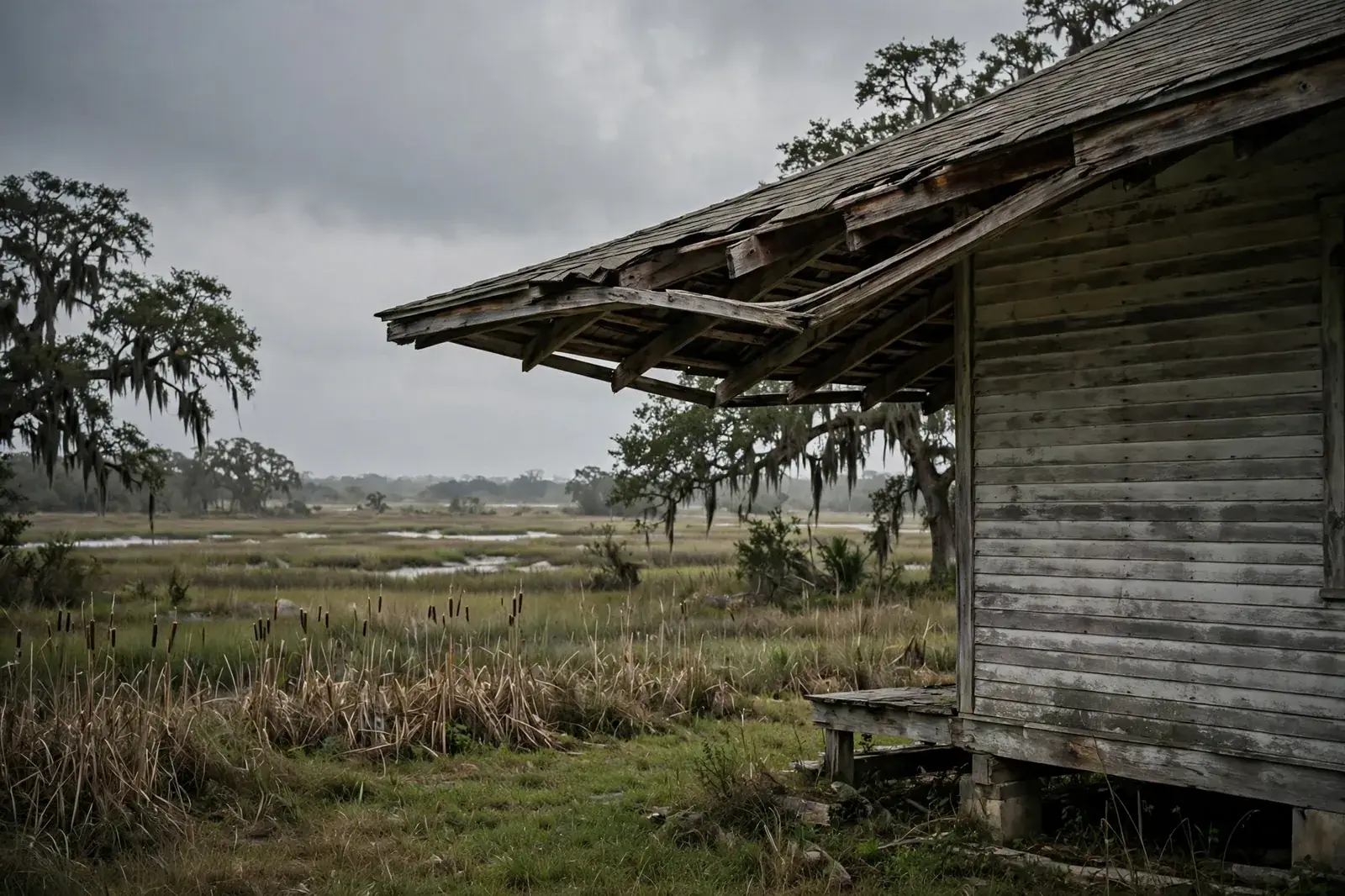
Pillar Guide · Sagging Roof Repair
Sagging Roof Repair in Beaumont
A sagging roofline is the structure speaking, not the surface, and in Beaumont it usually reports years of hidden water damage. This guide explains what causes a roof to sag, how the damage is assessed safely, and what repair involves.
The Problem
What does a sagging roof actually mean in Beaumont?
A roof sags when the structure carrying it, decking, rafters, or trusses, can no longer hold its designed line under load. From the street it shows as a dip in a slope, a wavy ridge, or a valley that has dropped out of plane. From the attic it tells its story in softened, darkened timber, split rafter ends, and decking that flexes where it should feel solid. In Beaumont the overwhelming cause is water over time, chronic leaks soaking timber until it loses strength, in a climate where humidity never gives saturated wood a real chance to recover.
Sagging develops slowly and is easy to normalise. The dip that was faint one year becomes the line a homeowner stops seeing, and the roof keeps shedding most rain, so the problem files itself as cosmetic. It is not. A deflecting slope changes how water runs, ponding it in the dip on lower pitches, cracking shingles and opening laps along the flex lines, and admitting more of the water that caused the sag. The condition feeds itself, and the structural margin thins with every wet season the timber stays damp.
Safety frames the whole subject. A mildly sagging area over sound but overloaded structure is a planned repair. A pronounced sag with cracked members, spreading movement, or a ceiling below that is also deflecting is a load problem that deserves prompt professional eyes and a light touch until it has them, no storage loads in the attic, no casual foot traffic on the slope. A Beaumont contractor assessing sag will work from the attic first and will say plainly if the area should not be walked on, that caution is information, not drama.
Causes
What causes a roof to sag in Beaumont?
Sagging is structural, and in this climate its causes are dominated by water and time. These are the mechanisms a proper assessment distinguishes.
Long term leak damage to decking and rafters
Chronic leaks at flashing, valleys, boots, or failed sections drip onto the same timber for seasons, and in Beaumont humidity the wood stays wet, softens, and loses its grip on fixings. Decking deflects first, then rafter tops decay at the bearing points. This is the leading sag cause locally, and the leak that built it is usually still active above the worst of the softness.
Undersized or over spanned structure
Some older Beaumont homes and additions were built with rafters or joists that were marginal for their span and load, and they have deflected gradually under decades of roofing weight, worsened each time a heavier covering or an extra layer was added. This sag is dry, slow, and general across a slope, unlike the localised softness of leak damage, and the distinction sets the repair.
Broken or cracked rafters and trusses
Impact from a fallen tree, a past overload, or a split at a knot or fixing can crack a single member, dropping its section of roof while neighbours hold the line either side. Truss damage has its own rules, trusses are engineered systems and a cut or broken chord affects the whole unit. Localised, sudden sag after an event points this way and needs member level inspection.
Added layers and load creep
Each additional layer of roofing adds permanent weight the structure was not always designed to carry, and Beaumont roofs with two or three layers over ageing decking show the arithmetic as deflection, especially on shallow pitches. Waterlogged material from leaks adds further load in the same spots. Load creep sag is a whole slope conversation, and the cure includes removing weight, not only adding strength.
Foundation or wall movement
Where the walls or foundations supporting the roof move, through soil shift or settlement, the roof structure is pulled out of line and slopes and ridges show it as developing sag or waviness that does not match any timber damage in the attic. Gulf soils move with moisture cycles, and this cause, though less common, must be ruled in or out, because strengthening rafters will not cure a moving bearing.
Attic storage and altered structure
Attics loaded with storage on joists meant only to carry a ceiling, and past alterations that cut or removed truss webs or rafter ties for space, both remove the structure ability to hold its line. The sag then maps to the altered or loaded area with uncomfortable precision. Restoring the missing ties and clearing the load are part of the repair, and they cost less than the timber work they prevent.
The Process
How is a sagging roof assessed and repaired?
Attic first structural inspection
The contractor inspects from the attic, testing timber for softness, checking rafter and truss members for cracks and decay, reading moisture patterns, and noting any cut or altered structure. The slope above is matched to the members below. This internal survey decides safety, cause, and whether the job is decking, carpentry, or a wider structural scope, before anyone loads the roof by walking it.
Stop the water that caused it
Where leaks built the damage, they are located and their repair is sequenced with the structural work, because new timber under an active leak is money planted in a swamp. Temporary protection may go on first in Beaumont weather, with permanent surface repair following the carpentry, but the order is always the same, the water story ends before the structure story is closed.
Sister, replace or strengthen members
Decayed decking is cut out and renewed, softened or cracked rafters are replaced or sistered with new timber fixed alongside, and missing ties or webs are restored to the original structural pattern. Deflection is eased back toward line as the work allows, without forcing old structures into shapes that split them. The aim is a sound, load carrying roof plane, honestly achieved.
Rebuild the surface and monitor
The roof surface over the repaired structure is rebuilt in correct layers, with any ponding the sag created corrected in the falls. You receive a record of what was found and strengthened, and simple reference points, a ridge line photograph, a marked attic member, against which any future movement can be judged rather than guessed. New movement after repair is a reportable event, not a wait and see.
In Detail
Can a sagging roof be repaired, or is it replacement territory?
Most Beaumont sagging is repairable, because it is usually local, a leak damaged bay or two, a cracked member, a section of decking that has given up, surrounded by a structure that is fundamentally sound. The repair then is carpentry plus surface rebuilding over the affected area, substantial but contained. The cases that grow are those where decay is general, many members softened by widespread leaking, or where the whole framing was undersized and has deflected across every slope. Those are larger structural programmes, still often short of whole roof replacement, but they need an honest scope from the attic evidence, not a surface opinion.
The decision that matters most is timing. Structural timber does not stabilise while its leak continues, so every season of delay moves a contained sistering job toward a multi member rebuild, and moves the surface consequences, ponding, cracked laps, new leaks, along with it. Conversely, a sag assessed early, with most members sound, is one of the more satisfying repairs in roofing, the line comes back, the ponding goes, and the roof returns to ordinary maintenance. Sagging rewards the first call more than almost any other roof condition.
Local Conditions
How does Beaumont weather drive sagging roof repair?
For sagging roof repair, Beaumont's climate is not background detail, it is the cause behind most calls. Atlantic hurricane season runs from June 1 through November 30. Hurricane Harvey in 2017 stalled over Southeast Texas and caused severe flooding across the Beaumont area, flooding thousands of homes, while a United States rainfall record of 60.58 inches was recorded at nearby Nederland.
Beaumont housing spans oil boom era historic homes from the early 1900s in and around the Oaks Historic District, mid century ranch and bungalow housing across South Park, Pear Orchard and the North End, and late twentieth century tract subdivisions on the west side in areas such as Dowlen West, Amelia and Calder Highlands. ['Lamar University', 'Neches River, along the east side of the city', 'Interstate 10, crossing Beaumont east to west', 'Dowlen Road retail corridor, including Parkdale Mall', 'Spindletop, site of the 1901 oil gusher, marked by the Spindletop Gladys City Boomtown Museum', 'McFaddin Ward House Museum on the Calder Avenue corridor', 'Texas Energy Museum in downtown Beaumont', 'Tyrrell Park and the Beaumont Botanical Gardens and Cattail Marsh area in the southwest of the city'] A contractor who works in Beaumont reads that weather history in the roof itself, which is why local experience matters for sagging roof repair.
Beaumont has a humid subtropical climate in the Piney Woods region of eastern Texas and is among the wettest parts of the state, with annual rainfall around 60 inches in published climate summaries. Hurricanes and tropical storms are a recurring fact of life on this part of the Gulf Coast. None of that makes sagging roof repair unusual work in Beaumont. It makes it routine work, done by contractors who see the same Gulf weather patterns on roofs across the city every week.
Cost Factors
What does sagging roof repair cost in Beaumont?
Sagging repair pricing depends on how many members are affected and how much surface must be rebuilt above them. These rows reflect the typical Beaumont range for localised work.
Ranges are general guidance, not a quote. The contractor confirms the final price after inspecting your roof.
When To Call
When does a sagging roof need urgent attention in Beaumont?
Call promptly when you notice a new dip, a ridge that has gone wavy, doors or ceilings changing with a developing deflection, or any sag that appears or worsens after a storm or a tree strike. Call urgently, and keep people and loads away from the area, if the sag is pronounced, if you hear cracking from the structure, or if the ceiling below is bowing. Those are load warnings, and in Beaumont rain a weakened structure is also taking water that adds weight where it can least afford it.
A long standing, stable looking sag still deserves assessment rather than indefinite tolerance. The attic inspection will usually find the cause, most often a leak that can be stopped and a local set of members that can be strengthened, and it converts an anxiety into a plan. What sagging should never get is weight, storage in the attic above it, or another layer of roofing laid over it to tidy the line, both of which spend the remaining margin of a structure that is asking for help.
Go Deeper
Where does sagging roof repair go from here?
City Page
Sagging Roof Repair in Beaumont, TX
The local service page for sagging roof repair across Beaumont, with first steps, response and coverage.
Open the city page →Neighbourhood
Sagging Roof Repair in Pear Orchard
How sagging roof repair plays out in Pear Orchard, with the problems local homes see most.
Sagging Roof Repair in Pear Orchard →Cost Guide
Roof Repair Cost
Typical Beaumont price ranges for this kind of repair and what moves the price.
Read the cost guide →Sagging Roof Repair by neighbourhood
The Sagging Roof Repair in Beaumont, TX city page covers the whole city. Each neighbourhood page below looks at sagging roof repair on its own streets, with its own housing and exposure.
FAQ
Sagging Roof Repair questions, answered
It depends on the cause and the degree, which is exactly what the attic inspection establishes. Gradual deflection in sound but ageing timber is a repair matter. Softened, cracked, or rapidly moving structure is a safety matter, and the contractor will tell you plainly which you have and what areas to avoid.
Treat any new or worsening sag after an impact or storm as urgent until assessed. Roofs rarely fail without giving this kind of visible notice, and sagging is the notice, it should never be filed as a cosmetic quirk.
Often the line can be improved as members are sistered or replaced and decking is renewed, but old structures are eased toward line, not forced to a surveyors flatness that would split timbers and finishes. The functional goals are strength, correct water runoff, and a stable line that stops moving.
Where a residual gentle deflection remains in sound structure, your contractor should say so and explain its effect, usually none on performance once falls and strength are restored. A promise of a perfectly straight old roofline deserves the same scepticism as a promise of none.
Fixing the leak stops the cause, and it is essential, but timber that has softened or members that have cracked do not regain strength when they dry, especially in Beaumont conditions where full drying is rare. The structure that deflected stays deflected and weaker than its neighbours.
The complete repair is therefore always two part, end the water, restore the structure. Quotes that offer only the first part should be understood as leak repairs on a still sagging roof, with the sag itself left to progress more slowly.
A visible sag will draw questions in any inspection connected with a sale or a policy, and an undocumented sag invites the worst assumptions. A contractor assessment and repair record, cause found, members strengthened, surface rebuilt, converts it into a maintained feature with evidence.
If you are preparing a Beaumont home for sale, having the attic inspected and the report on file is a practical step. It either clears the roof with documentation or finds the work while you can still schedule it calmly.
Talk to someone about your roof today
Describe the problem on one call and get connected with a local Beaumont roofing contractor.