Homeowner Guide
Signs Your Roof Needs Repair: What Beaumont Homeowners Should Look For
Most roof repairs begin as a sign spotted from a ceiling or a yard: a stain, a lifted edge, granules in a gutter. This guide helps Beaumont homeowners read those signs properly, telling the ones that point to a leak already letting water in from the ones that are early warnings, and the urgent from the plannable. It also explains how Gulf storms, heavy rain, and humidity create the signs, and exactly what to do on the day you spot one.
Guide
What are the signs inside your home?
The clearest inside sign is a stain on a ceiling or high on a wall that was not there before. Fresh water marks tend to look darker and feel damp, while older ones dry to a pale ring with a defined edge, and either version deserves attention because both say water has been through the roof above. Bubbling or peeling paint near the top of a wall tells a similar story, as the moisture behind the surface pushes the finish away. Note which room sits below which part of the roof, because that pairing is the first clue a contractor uses when tracing starts.
A stain marks where water arrived, not where it entered, and the two can be far apart. Water getting in at a flashing joint can run along the decking or down a rafter before it finds a seam in the ceiling to drip through, so the entry point may sit several feet uphill of the mark below. That is why ceiling leak tracing and repair, at $300 to $850 as general guidance, exists as a job in its own right. Recording when a stain grows, during a storm or in the days after, helps narrow the path before anyone sets foot on the roof.
Guide
What are the signs outside your home?
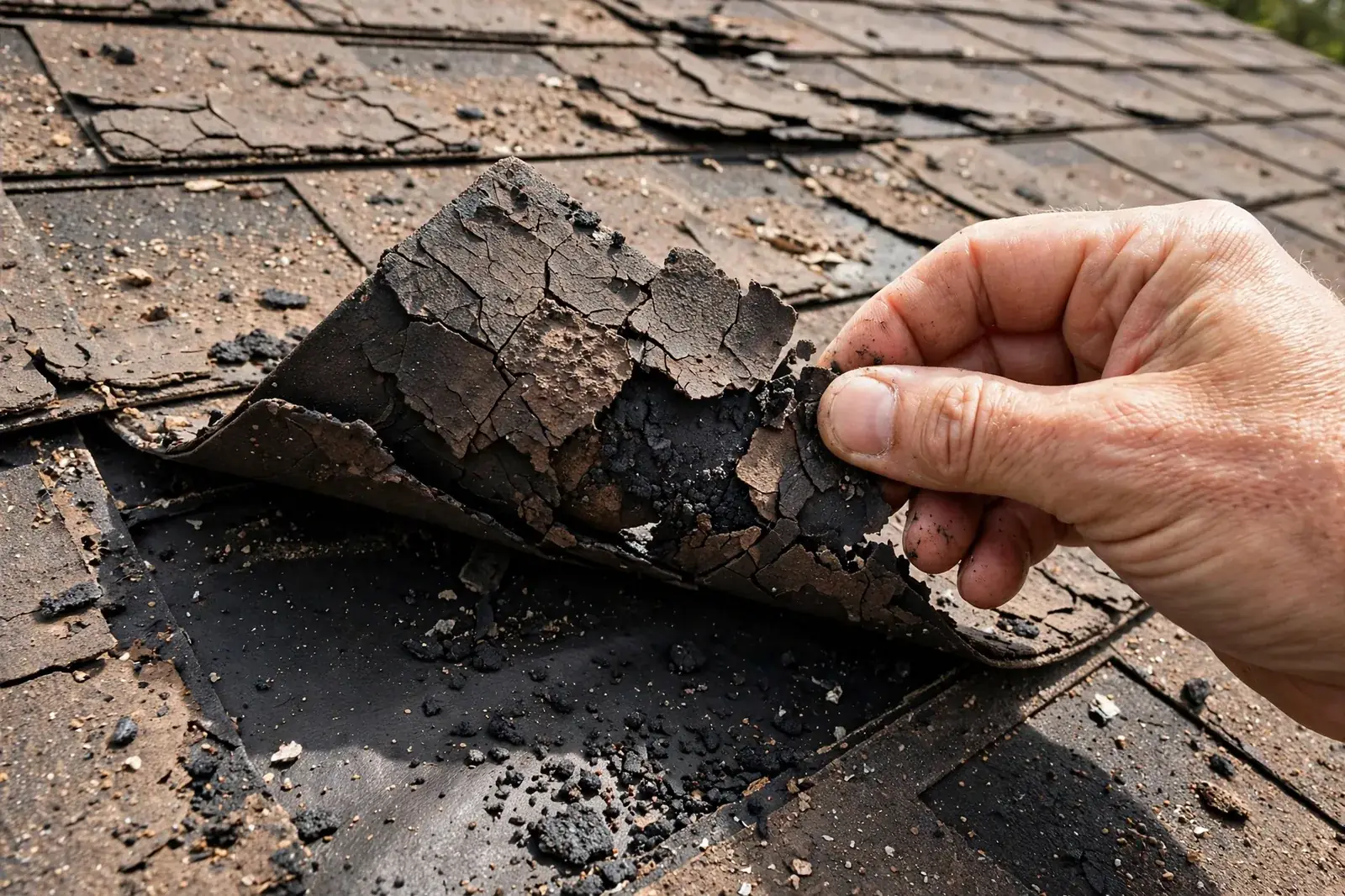
From the ground, the outside signs most worth learning are changes to the surface you can see from the street or the yard. Missing shingles after a storm, edges that lift or curl instead of lying flat, and sections that look patchy or uneven against their neighbours all show a surface losing its seal. Granules collecting in gutters or at the foot of downspouts suggest the protective surface of the shingles is wearing away. A roofline that dips where it used to run straight deserves prompt attention, because a changing line can reflect trouble in the decking or support below.
Closer details repay a look after rough weather passes. Shingle fragments in the yard, rust streaks running below a metal detail, cracked rubber collars around vent pipes, and gaps opening where flashing meets a chimney or wall are all early warnings that can be spotted from ground level, with binoculars if you have them. On older Beaumont homes, a patch that no longer matches its surroundings in colour or profile often marks a spot that has needed work before, and repeated trouble in one place is itself a sign worth reporting rather than a coincidence.
Ground checks have limits, and knowing them matters. The feel of soft decking, the condition of seals under lifted edges, and the state of the underlayment cannot be judged from the pavement, however carefully you look. Those checks belong to the contractor on the roof, who can test the surface gently and photograph what is found. Your part is the regular habit: a slow look from the ground after each Gulf storm, compared against dated photographs from earlier in the year, catches change while it is still small and makes the eventual inspection faster and more focused.
Guide
Which signs point to a leak that is already active?
An active leak announces itself with movement rather than a static mark. Dripping during rain is the obvious version, but a stain that darkens while a storm is overhead, a damp patch that spreads between morning and evening checks, or paint that bubbles further after each wet spell all say the same thing: water is still coming in. Mark the edge of a stain lightly in pencil and write the date beside it. If the mark crosses your line after the next rain, the leak is live and the search for its entry point should not wait.
Telling an active leak from the scar of an old one saves unnecessary worry in both directions. An old stain feels dry and hard, its outline stays fixed for months, and the ceiling around it shows no new change after heavy rain. An active one keeps a damp core, grows at the edges, and may soften the surface so it gives slightly under a fingertip. Keep notes across a few storms before deciding, unless water is plainly dripping, because a single dry week in Beaumont can make even a live leak look settled. When in doubt, treat a growing mark as active until an inspection proves the entry point has closed.
Guide
Which signs are urgent and which can be planned?
Treat water entering the home now as urgent, in whatever form it arrives. A steady drip, a spreading stain during rain, surface missing over a living area after a storm, or any sign of sagging in a wet ceiling all call for a same day conversation, because each hour of entry adds damage that a later repair then has to undo. A roof area that has lost its covering in wind is urgent for the same reason: the next band of rain will find the opening, and in Southeast Texas the next band is rarely far away.
Plenty of signs, by contrast, can be planned calmly into a dry window. A cracked pipe boot that has not yet let water through, early lifting along a shingle edge, tired sealant around a skylight frame, and granule loss without any leak all describe wear caught at the warning stage. Skylight reseal and flashing at $250 to $600 and pipe boot replacement at $150 to $400 are the sort of jobs that settle these signs properly, as general guidance confirmed after inspection. Booking them while they are still warnings is how small bills stay small.
Guide
How does Beaumont weather create these signs?
Gulf storms build many of the signs on this page in a single night. Strong wind gets under shingle edges and lifts them a little further each time it gusts, breaking the seal that kept the surface flat and watertight. Driven rain does not fall politely downward during a storm; it pushes sideways and uphill, finding laps, joints, and nail lines that ordinary rain never reaches. Flying debris adds its own damage, striking the surface hard enough to crack shingles or dent vents, and the marks of that night may only show up as a stain weeks later when ordinary rain follows the new path in.
The quieter Beaumont weather does slower work between storms. Heavy rain over a long spell tests valleys and low slope sections where water lingers, and ponding on a flat area keeps a worn seam under pressure for hours after the sky clears. High humidity then slows everything from drying out, so a detail that let a little water in stays damp, and rubber collars, sealants, and flashing joints age under constant warmth and moisture. The strong sun between rains bakes flexibility out of exposed surfaces, which is why a collar can look sound from the ground yet be cracked right through.
Guide
What should you do when you spot a sign?
Start by recording, not fixing. Photograph the sign from inside and, where the area is visible, from the ground outside, and note the date, the weather at the time, and when you first noticed anything. A photograph of a stain with a coin beside it for scale, repeated after each storm, builds a growth record that no memory can match. Keep any shingle fragments or debris you find in the yard, too. That simple file turns your first call from a vague worry into a description a contractor can act on straight away.
Resist two tempting shortcuts while you wait. Climbing up to look closely is rarely necessary and never worth a fall, because ground photographs plus an accurate description give a contractor enough for the first visit, and the close inspection belongs on the roof with proper access. Painting over a stain or sealing it from inside the attic is the other shortcut to avoid: it hides the very evidence that tracing depends on, and it can trap damp behind a fresh surface. Leave the sign visible and reachable, and let the first person who covers it be the one repairing its cause.
Keep Reading
What should you read next?
Related
Roof Repair vs Replacement in Beaumont
Continue with the related page on this site.
Roof Repair vs Replacement in Beaumont →FAQ
Questions, answered
Granules in the gutter mean the shingle surface is shedding its protective coating, which is a wear sign rather than an emergency on its own. Mention it when you call, note how much you found and when, and let an inspection judge how much surface life remains before deciding whether any work is needed now.
Touch and time give the answer. An old stain feels dry and firm, holds a fixed outline across several storms, and often carries a pale, settled colour. A live one feels damp after rain, darkens or spreads between checks, and may soften the paint around it. Marking the edge in pencil with a date turns guesswork into evidence within a couple of wet spells. If the mark grows or water drips, treat it as active and get the entry point traced.
Water actively entering the home is the sign that should not wait, whether it arrives as a drip, a stain spreading during rain, or damp reaching a light fitting. Missing surface over a living area after a storm belongs in the same category, because the opening is there before the next rain finds it.
Yes, for the checks that matter at your stage. Missing or lifted shingles, granules in gutters, debris in the yard, rust streaks, and changes in the roofline all show from the ground, and binoculars sharpen the view of collars and flashing. What the ground cannot tell you is how the decking feels or how seals are holding, and those checks belong to a contractor working on the roof. Your ground record is what makes that visit count.
It can wait a short while only if the area underneath still has its underlayment intact and dry weather holds, and even then it should be booked rather than forgotten. A missing shingle leaves the layer below exposed to sun and driven rain it was not designed to face alone, and the next storm may turn an unwetted patch into an active leak. A small section of shingle repair runs from $250 to $750 as general guidance, and settling it early protects the decking beneath.
Talk to someone about your roof today
Describe the problem on one call and get connected with a local Beaumont roofing contractor.